SPAG games children ask to play, with the planning done for you.
SPAGhetti is a café world where pupils practise spelling, punctuation and grammar through play. Every lesson comes with a slide deck, three differentiated worksheets and a game. It was built for SEN classrooms by an SEN teacher.
It's actually really fun.
Can we play SPAGhetti today?
It's an engaging literacy tool for learners of all levels.
Whose hat is it? Help me, chef!
Oh no! ? fell in the soup.
Your square is waiting. Pick an answer above.

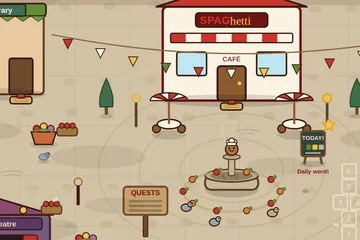
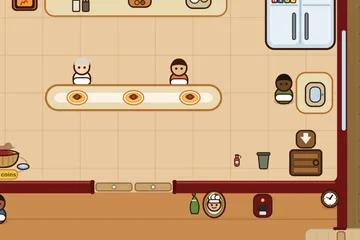
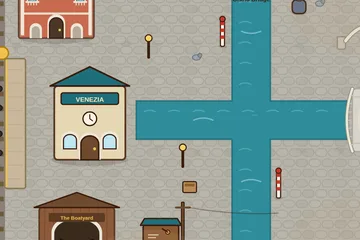
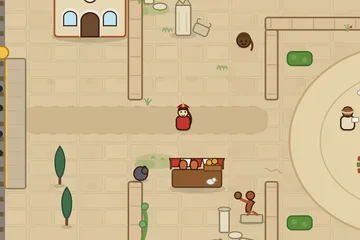
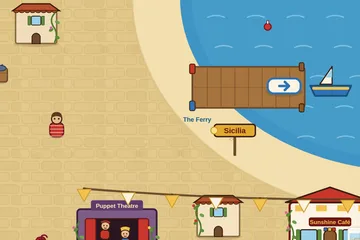
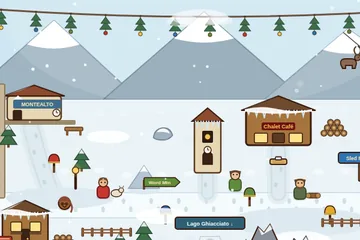
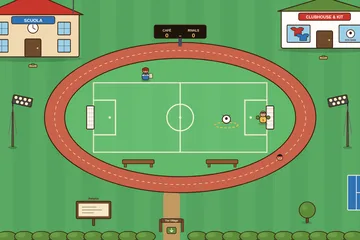
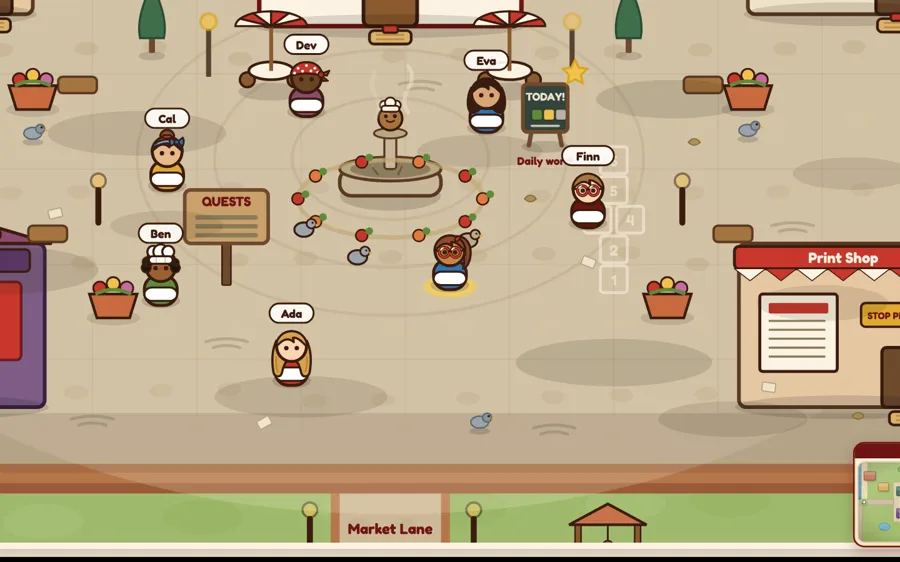
The village your pupils play in. Tap a building to look around.
Take the tour. Every shot is the real game.
Two tours: yours and your pupils'. Every shot is the real game.
For teachersLessons, the class quiz, Kitchen Check, the hot seat and the SALT drawer.
For your pupilsTheir café, the town and beyond, the games and the class quiz.
SPAG is in every lesson, and many children need more support with it.
of pupils left primary school in 2025 below the expected standard in grammar, punctuation and spelling.
DfE, KS2 attainment 2024/25children are struggling with talking or understanding words.
Speech and Language UK, Listening to unheard children (2023)more likely to be behind in English at age 11 if those speech and language challenges go unsupported.
Speech and Language UK (2023)SPAGhetti is built for that gap: short, low-pressure practice of the SPAG the curriculum expects, with speech and language therapy techniques built in for the children who find language hard.
Pick a lesson. The deck, the worksheets and the game are already made.
Over 100 lessons across spelling, punctuation, grammar, vocabulary, reading, writing and speaking and listening, mapped to the national curriculum and Functional Skills. No hunting the internet the night before. Practice papers too, in the real layout: Year 6 and Year 2 in the SATs style, and Functional Skills from Entry 1 to Level 2. A quick 30-mark version or the real thing with a spelling test, sat on devices, set as homework or printed, marked for you with a report by strand.
A whole-class deck
Teaching slides with speaker notes on every one. Editable PowerPoint, or a PDF for the board.
Three worksheets and answers
Mild, Medium and Spicy versions of the same sheet, plus an answer key. A4 and ready to print.
A game for it
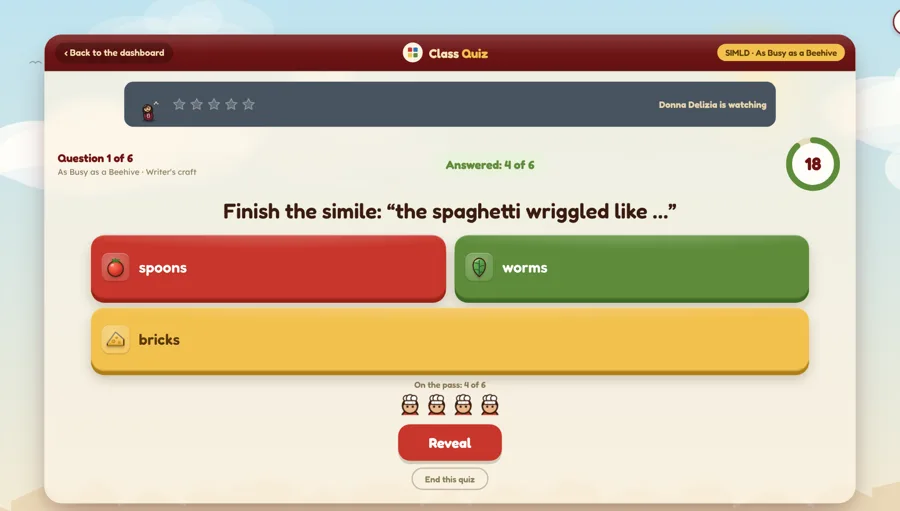
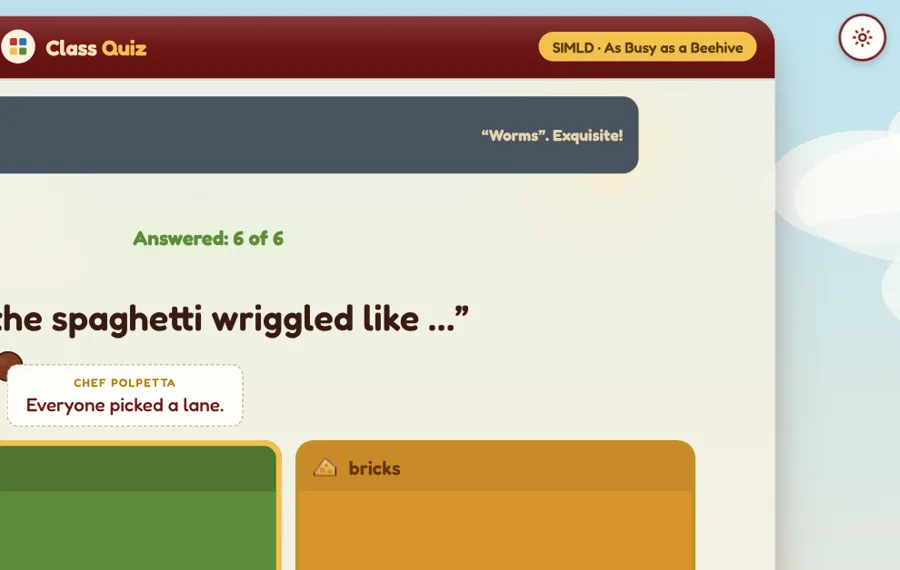
The same skill in a café mini-game. Set it as work, or play it live as a class quiz on the board.
Three levels. Same tasks, same order, same layout.
A child glancing at the next desk can't tell whose sheet is the gentle one. Support without the spotlight. These are real sheets from the "Sounds the Same" lesson.
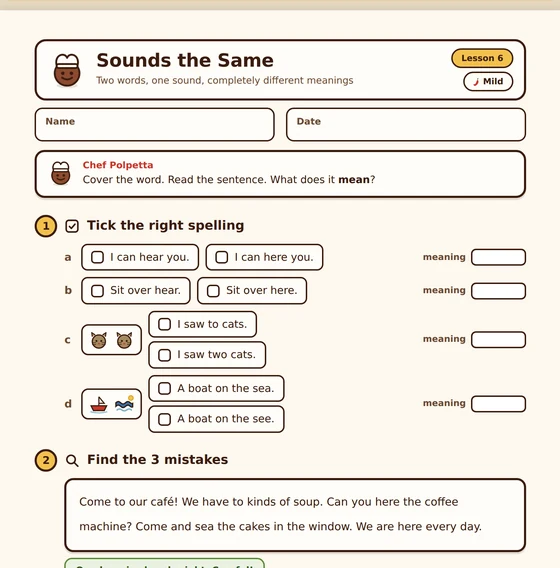
Picture clues, a word bank and sentence starters. A way in for every child.
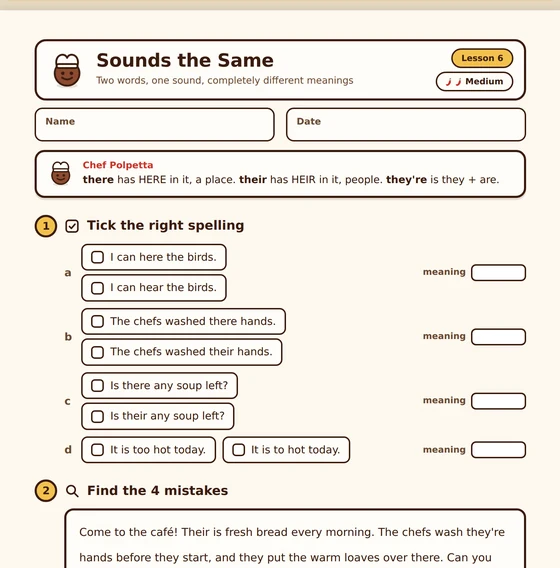
The core content with no scaffold. The expected standard.
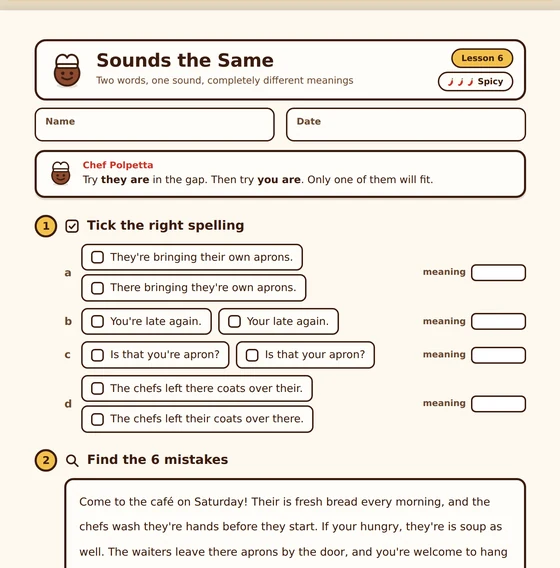
Near-misses, two demands in one sentence, and a reason to explain.
Browse all the lesson packs
Every pack is free to read: the teacher notes and the three worksheets, Mild, Medium and Spicy, as web pages you can print.
Sounds · 1
- Listen First Sounds, Years 1 to 2 · Mild · Medium · Spicy
Spelling · 17
- Sound It, Write It Spelling, Years 1 to 2 · Mild · Medium · Spicy
- One or Lots? Plurals, Years 1 to 2 · Mild · Medium · Spicy
- Add the Ending Prefixes & suffixes, Years 1 to 2 · Mild · Medium · Spicy
- Un-Does It Prefixes, Years 1 to 2 · Mild · Medium · Spicy
- Two Words, One Word Compound word formation, Years 1 to 2 · Mild · Medium · Spicy
- Sounds the Same Homophones & near-homophones, Years 1 to 2 · Mild · Medium · Spicy
- Change Before You Add Spelling, Years 1 to 2 · Mild · Medium · Spicy
- Endings That Add Meaning Spelling, Years 1 to 2 · Mild · Medium · Spicy
- Front of the Word Prefixes, Years 3 to 4 · Mild · Medium · Spicy
- Grown-Up Endings Spelling, Years 3 to 4 · Mild · Medium · Spicy
- The Word List Spelling, Years 3 to 4 · Mild · Medium · Spicy
- Lots, or Belongs? Apostrophes, Years 3 to 4 · Mild · Medium · Spicy
- Change the Root Prefixes & suffixes, Years 5 to 6 · Mild · Medium · Spicy
- Turn It Into a Verb Spelling, Years 5 to 6 · Mild · Medium · Spicy
- Verb Prefixes Prefixes, Years 5 to 6 · Mild · Medium · Spicy
- Tricky Endings Spelling, Years 5 to 6 · Mild · Medium · Spicy
- The Letters You Can't Hear Spelling, Years 5 to 6 · Mild · Medium · Spicy
Grammar · 17
- And Then… Grammar, Years 1 to 2 · Mild · Medium · Spicy
- Sort the Words Word-class sorting, Years 1 to 2 · Mild · Medium · Spicy
- Four Kinds of Sentence Sentence function, Years 1 to 2 · Mild · Medium · Spicy
- Join the Two Halves Grammar, Years 1 to 2 · Mild · Medium · Spicy
- Say More About It Sentence building from a word bank, Years 1 to 2 · Mild · Medium · Spicy
- Now or Then? Verb tenses, Years 1 to 2 · Mild · Medium · Spicy
- When, Where, Why Grammar, Years 3 to 4 · Mild · Medium · Spicy
- Have You Done It Yet? Verb tenses, Years 5 to 6 · Mild · Medium · Spicy
- Little Joining Words Word-class sorting, Years 3 to 4 · Mild · Medium · Spicy
- We Was, or We Were? Verb tenses, Years 3 to 4 · Mild · Medium · Spicy
- Might, Should, Must Verb tenses, Years 5 to 6 · Mild · Medium · Spicy
- Say It Once Cohesion, Years 1 to 2 · Mild · Medium · Spicy
- The Sneaky Word Classes Word-class sorting, Years 5 to 6 · Mild · Medium · Spicy
- The Word-Class Arena Grammar, Years 5 to 6 · Mild · Medium · Spicy
- Who, Which, Where Parenthesis with commas, brackets and dashes; relative clauses, Years 5 to 6 · Mild · Medium · Spicy
- Who Does What? Grammatical terminology, Years 1 to 2 · Mild · Medium · Spicy
- The Hidden Doer Grammatical terminology, Years 3 to 4 · Mild · Medium · Spicy
Punctuation · 16
- Where Does It Stop? Terminal punctuation, Years 1 to 2 · Mild · Medium · Spicy
- Big Letter, Special Word Punctuation, Years 1 to 2 · Mild · Medium · Spicy
- Commas in a List Commas to separate items in a list, Years 1 to 2 · Mild · Medium · Spicy
- Squash Two Words Apostrophes, Years 1 to 2 · Mild · Medium · Spicy
- It Belongs to Someone Apostrophes, Years 3 to 4 · Mild · Medium · Spicy
- Whose is it? Apostrophes, Years 3 to 4 · Mild · Medium · Spicy
- Who Said That? Punctuation, Years 1 to 2 · Mild · Medium · Spicy
- All the Speech Marks Punctuation, Years 5 to 6 · Mild · Medium · Spicy
- The Proofread Proofreading, Years 3 to 4 · Mild · Medium · Spicy
- Pause After the Start Sentence punctuation, Years 3 to 4 · Mild · Medium · Spicy
- The Comma That Changes Everything Commas to separate items in a list, Years 5 to 6 · Mild · Medium · Spicy
- The Extra Bit Parenthesis with commas, brackets and dashes; relative clauses, Years 1 to 2 · Mild · Medium · Spicy
- Introduce, or Join? Colons, semicolons, dashes and bullet points, Years 3 to 4 · Mild · Medium · Spicy
- Colon, Then the List Commas to separate items in a list, Years 5 to 6 · Mild · Medium · Spicy
- Every Line the Same Colons, semicolons, dashes and bullet points, Years 5 to 6 · Mild · Medium · Spicy
- The Man-Eating Shark Grammatical terminology, Years 5 to 6 · Mild · Medium · Spicy
Vocabulary · 6
- A Better Word Synonyms — choosing words with the same meaning, Years 1 to 2 · Mild · Medium · Spicy
- Use Your Senses Synonyms / antonyms / word families / register, Years 3 to 4 · Mild · Medium · Spicy
- Word Families Synonyms / antonyms / word families / register, Years 3 to 4 · Mild · Medium · Spicy
- Posh or Plain? Synonyms / antonyms / word families / register, Years 5 to 6 · Mild · Medium · Spicy
- Same and Opposite Synonyms / antonyms / word families / register, Years 5 to 6 · Mild · Medium · Spicy
- Find Out, or Discover? Synonyms / antonyms / word families / register, Years 5 to 6 · Mild · Medium · Spicy
Writer's craft · 12
- As Busy as a Beehive Similes, Years 3 to 4 · Mild · Medium · Spicy
- The Kitchen Is a Zoo Metaphors, Years 5 to 6 · Mild · Medium · Spicy
- Polpetta's Perfect Pasta Alliteration, Years 3 to 4 · Mild · Medium · Spicy
- Sizzle, Clatter, Splosh! Onomatopoeia, Years 3 to 4 · Mild · Medium · Spicy
- The Oven Grumbled Personification, Years 5 to 6 · Mild · Medium · Spicy
- Words That Work Adjectives, adverbs and noun phrases, Years 5 to 6 · Mild · Medium · Spicy
- Spill the Beans Idioms, Years 3 to 4 · Mild · Medium · Spicy
- A Million Meatballs Hyperbole, Years 5 to 6 · Mild · Medium · Spicy
- Who Doesn't Love Pizza? Rhetorical questions and the rule of three, Years 5 to 6 · Mild · Medium · Spicy
- Stir, Stir, Stir! Repetition and rhythm, Years 3 to 4 · Mild · Medium · Spicy
- Lettuce Begin! Puns and wordplay, Years 5 to 6 · Mild · Medium · Spicy
- The Spoon Shook Show, don't tell, Years 5 to 6 · Mild · Medium · Spicy
Reading · 2
- Read It Like You Mean It Reading, Years 1 to 2 · Mild · Medium · Spicy
- Say It With Feeling Reading, Years 3 to 4 · Mild · Medium · Spicy
The SPAG is the game, not a quiz with a cartoon on top.
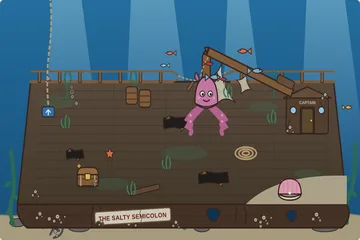
Pupils run their own café, explore towns across a little Italy, and play more than 70 games. Every one practises a real skill.
The café cast pupils get to know.
Each one has a job, a look and their own things to say. Tap one to say hello.
Reading, writing and oracy, on the same menu.
The games teach the SPAG. Around them sit the bigger skills: reading a text and showing you understood it, writing a whole piece and making it better, and talking to a room. All of it can be set as work, and all of it comes back to you.
Read it, then show you understood it.
Comprehension, fluency and practice papers, from the first short texts to Functional Skills Level 2.
- Comprehension Corner. Read a text, answer the questions, hand it in. Texts are levelled from Entry 1 to Level 2, or by year group.
- Reading Rush. Read aloud while tapping each word, then answer a question about it.
- Reading games for the skills underneath: find the sentence that sums it up (Boil It Down), predict with evidence (The Next Course), and alphabetical order (A–Z Shelf).
- The Tempest in the Puppet Theatre: five acts, a puzzle after each, then questions and a review.
- Paste your own text into Comprehension Corner, or pick one of ours, and set it as work.
- Print it instead: any comprehension task as a reading sheet.
- Practice papers sat on devices or printed: Year 2 and Year 6 in the SATs style, and Functional Skills reading from Entry 1 to Level 2, marked for you.
- Eight Functional Skills reading lesson packs, with printable sheets and answer keys.
Write a whole piece, then make it better.
From one strong sentence to a full piece of writing, with the redraft built in.
- Cook Up a Story. 124 prompts across seven kinds of writing: review, report, letter, description, instructions, diary and story. Sentence starters, a word tool and a senses planner help them start.
- Draw It Up. Storyboard the idea frame by frame, then write it up.
- Sentence work: join sentences well (Fold It In), write from dictation (Take the Order) and redraft a piece (Taste and Adjust).
- Structure: the punchiest headline and a report in order (Stop Press), paragraphs that link (Captain’s Log), and the parts of a text in order before writing your own (Plate It Up).
- Set writing as work with a word target and a deadline.
- Hand-ins: read, mark and comment on every piece. When a pupil redrafts, you see the first draft, the new one and what changed.
- Write together: the class builds one story live on the board.
- Writing sheets to print, word walls for the classroom, and ten Functional Skills writing lesson packs.
Speak up, listen well, and have it on record.
Speaking and listening taught, practised and evidenced, not just hoped for.
- Speak Up. Plan and practise a talk, a discussion or a hot-seat turn, then read the teacher’s feedback.
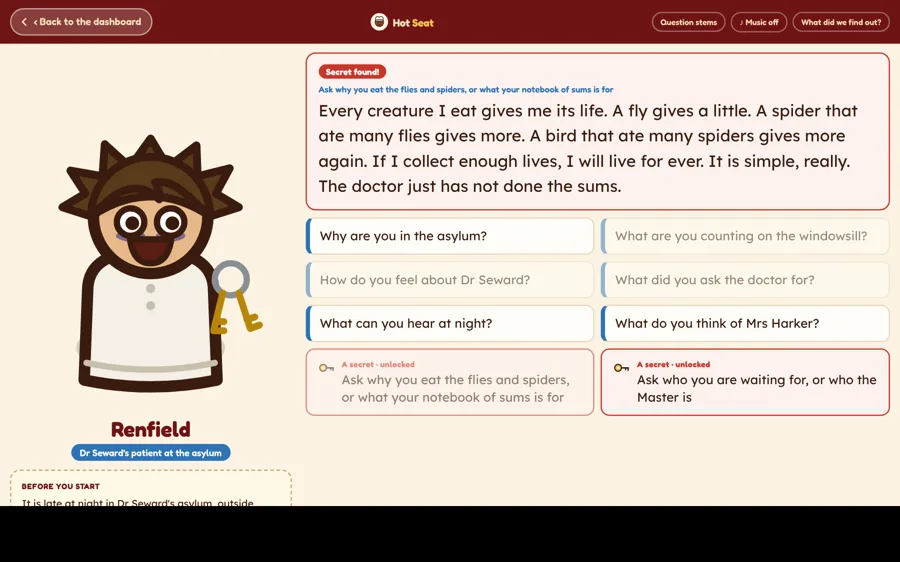
- Hot Seat. One pupil becomes a character and the class questions them. They can build the character first.
- Speech Stones. Build a sentence, then say it aloud.
- Listening games: blending sounds (Sound Bells) and listening for words (Word Fishing).
- Run a speaking session on the board and tick the criteria as you watch.
- The speaking record: an A4 evidence sheet with the Functional Skills speaking, listening and communicating criteria, Seen, Partly or Not seen for each occasion, your notes, and a GCSE Spoken Language checklist if you need it.
- Quiet Creatures: animals peep out when the room is quiet, and a Speak up mode helps pupils find the right volume. Nothing from the microphone is ever recorded.
- Five Functional Skills speaking lesson packs.
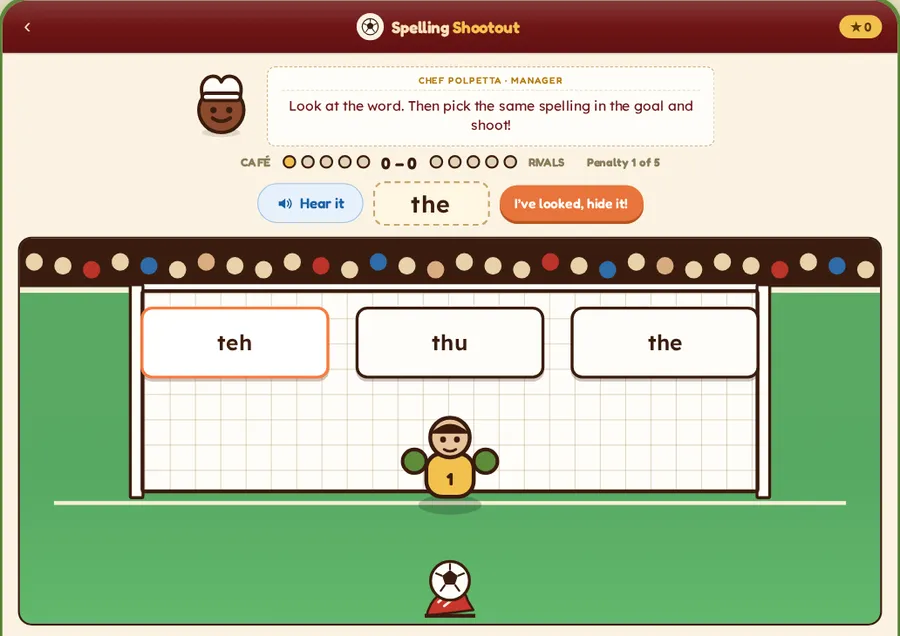
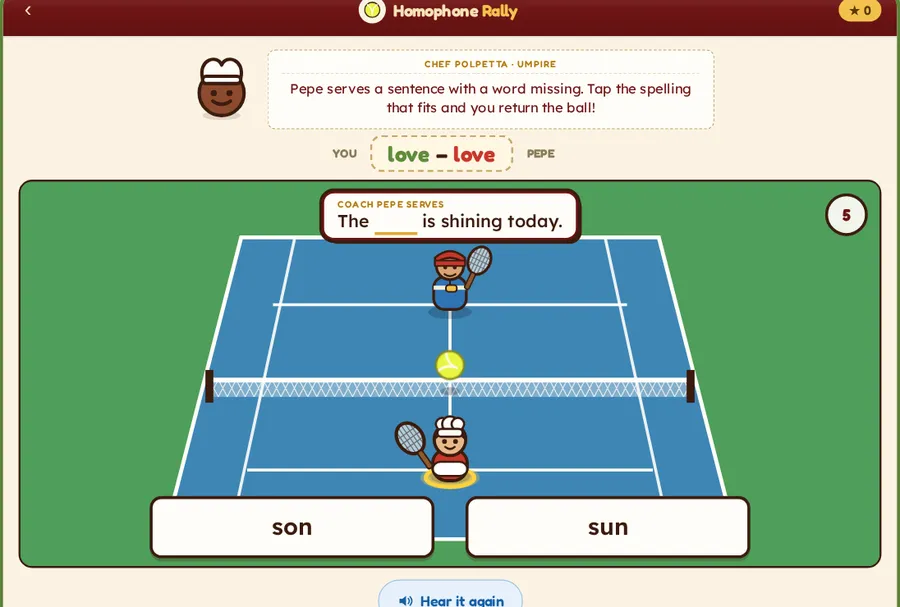
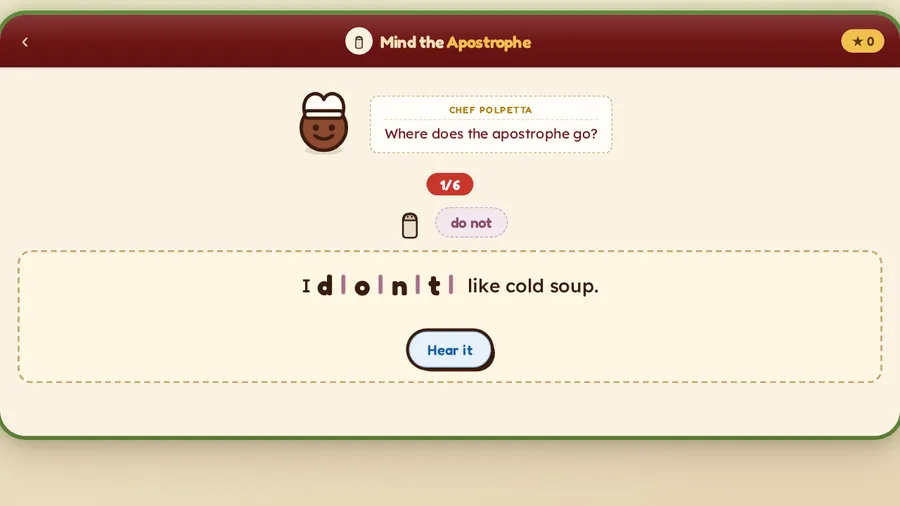
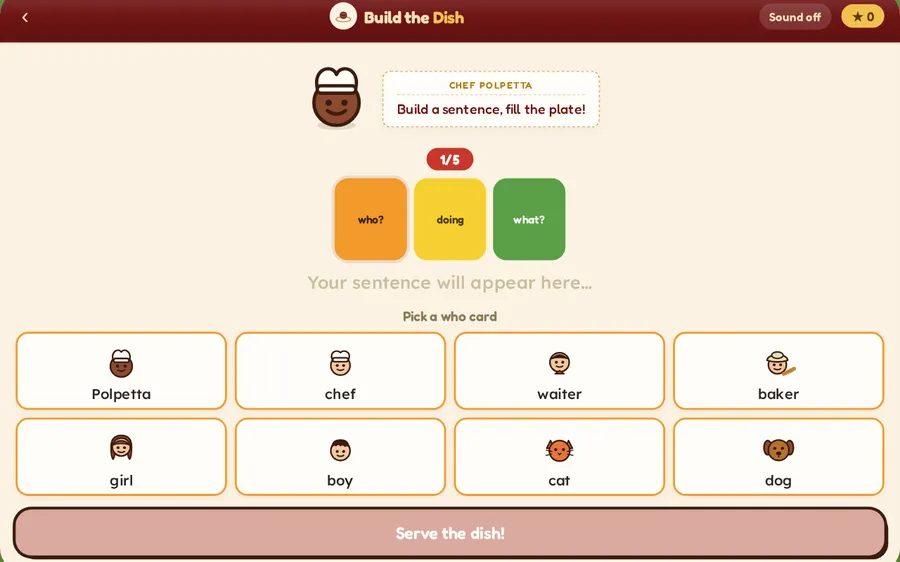
Play one yourself, right here.
Three of the games, exactly as a pupil sees them. Pick a spice level and a level. You play as a guest, so nothing is saved.
Sound on for Chef Polpetta. The whole game, with the café and every town, is one tap away at playspaghetti.com.
Made for every reader in the room.
SPAGhetti was designed around SEN from the first sketch, with speech and language therapists, not adapted afterwards.
- Playable without reading. Instructions are spoken and shown, and every question has a Hear it button.
- SALT techniques in the games. Colourful Semantics, word webs, sound work, pictures for key words, small steps.
- Support settings per pupil. Larger text, a dyslexia-friendly typeface or read-aloud, set for the class or for one child.
- Low pressure. Calm feedback, no "you failed" screens, and wrong answers coach rather than punish.
- Plain instructions. Game text is checked against a reading age, so the words telling a child what to do are never the hard part.
Set work, run the class, see who's secure.
- A class in minutes. Pupils join with a class code, or scan a printed login card.
- Set work as a game, a lesson or a piece of writing, and see who has finished.
- Targets for every pupil against national curriculum objectives: Emerging, Developing, Secure.
- Kitchen Check: who is secure on each skill, at a glance.
- Close the café during a lesson so the games stay on the work you set.
Play together on the board.
Pupils join from their own devices while the class watches the board. The teacher controls the pace.
Start with one class, or the whole school.
Free is free for as long as you like. Core and Premium are set up with you, not handed over.
Pick a plan
Free for one teacher and one class. Core for a teacher who teaches with it every week. Premium for the whole school.
We set up your classes
Your classes, the codes and printed login cards, ready for the first lesson.
A Taste Test to start
A short baseline, so you can see what changes.
Teach with it
Once or twice a week is plenty. Use the ready-made lessons, or set games, reading, writing and practice papers as work.
See the progress
Targets, Kitchen Check and the one-page SENDCo report show the before and after.
Get in touch
This opens an email to us with your details filled in. A teacher replies, not a sales team.
Ready when you are.
Start free today with one class, or get in touch about Core or Premium for your school.
Built by an SEN English teacher, tested with real classes.
SPAGhetti was made by an English teacher with SEN responsibilities at a London school, Elklan trained, who has worked alongside speech and language therapists, occupational therapists and SENDCos for years. Every game has been played by real classes, and what they found hard, confusing or boring has been changed.
What schools usually ask.
Which age groups is it for?
Pupils from KS1 to KS4. The SPAG is the national curriculum’s, from Year 1 to Year 6, which is exactly what many KS3 and KS4 pupils still need to secure. Functional Skills English is covered from Entry 1 to Level 2, with reading, writing and oracy alongside. It suits primary classes, secondary pupils, SEN groups and alternative provision. Games show no year labels, so older pupils never feel they are doing "baby work".
What do pupils need to log in?
A class code, or a printed login card with a QR code. Pupils choose a nickname and build a cartoon chef. There are no emails or passwords for children.
What data do you hold, and is it GDPR compliant?
We hold a nickname, initials, the chef the pupil built, their game progress and any writing they save. No real names, emails or dates of birth. The school is the data controller. Data is stored with Google Firebase and the site is served by Cloudflare. The privacy notice sets it all out, with a summary for your DPO.
What devices does it run on?
Anything with a modern browser: Chromebooks, iPads, laptops and the interactive whiteboard. There is nothing to install, and it can be added to a home screen like an app.
What happens when a plan ends?
Nothing is deleted. You drop to the Free plan: you keep every class and record, and extra classes become read-only until you renew. Pupils keep playing either way.
How is it different from other SPAG apps?
Most SPAG tools are quizzes. SPAGhetti is a game world, and every lesson also comes with a deck and three worksheets for the lesson itself. It was built around SEN and speech and language therapy techniques from the start. Premium adds evidence for reviews that general apps don't give you.
Can we pay by invoice?
Yes. We invoice schools directly and accept purchase orders.